
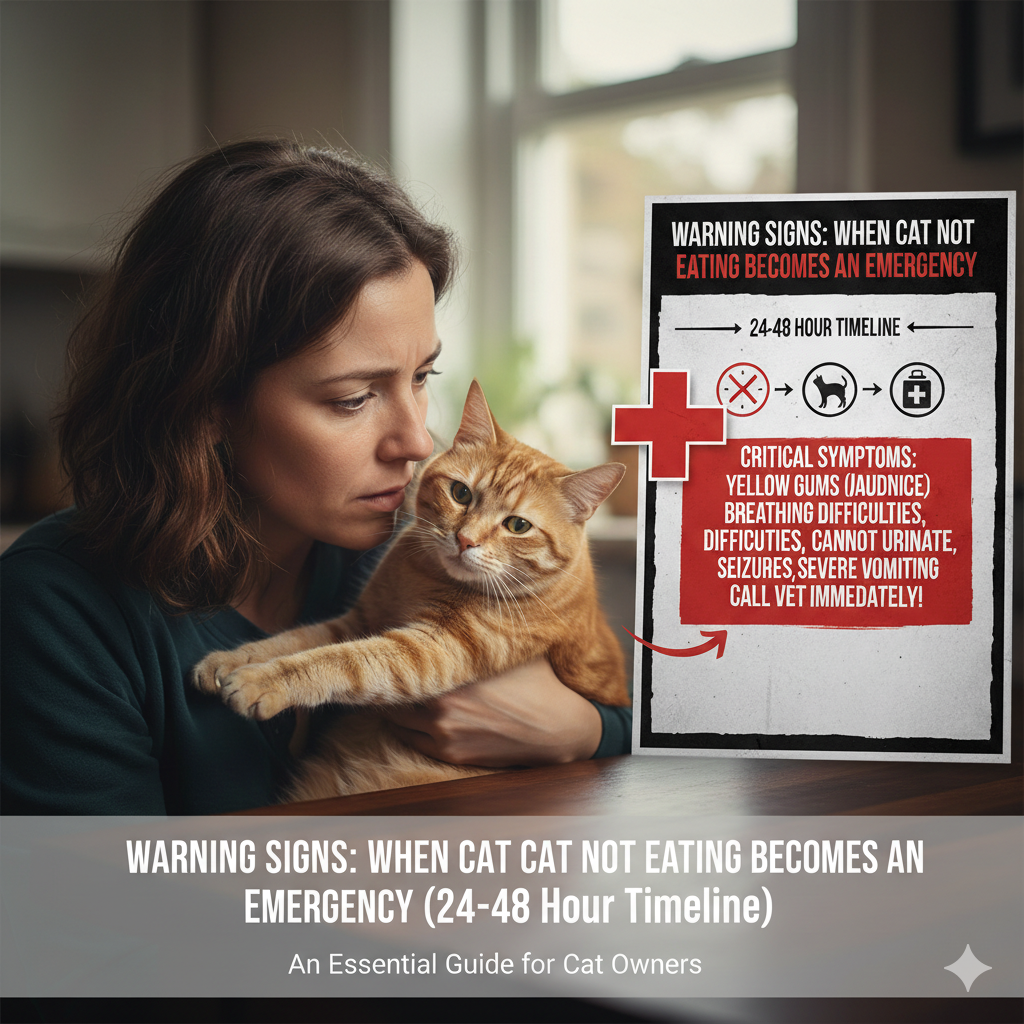
Warning signs: when a cat not eating becomes an emergency, it can be the difference between your cat’s life and death. Cats, unlike dogs and other pets, can suffer from a dangerous condition known as hepatic liposis (or fatty liver) that develops within 24 to 48 hours after not eating.It is vital that cat owners recognize the signs of emergency in their cats, due to this rapid degeneration. Understanding the timeframes for dealing with your cat is important, whether you are dealing with a kitten or an overweight feline. You can take immediate action if you see critical warning signs before a situation that is manageable becomes a crisis.
As a cat owner, you might wonder, “How long is too long for my cat to go without food?” It depends on the age, weight, and overall health of your cat, as well as any accompanying symptoms. A healthy adult cat rejecting foods might not be a reason for alarm, but when a cat not eating becomes an emergency, you’ll point out specialized red flags that demand immediate veterinary attention. From breathing difficulties in cats and inability to urinate to neurological symptoms and yellow gums in cats (jaundice), this comprehensive guide will walk you through the exact emergency timeline for cats, help you identify life-threatening symptoms, and provide a clear action plan for when to rush cat to vet. Understanding these critical cat health indicators could save your cat’s life.This is most most important question,Why my cat is not eating?
Understanding the Emergency Timeline: How Quickly Cats Deteriorate Without Food

Warning signs: when cat not eating becomes an emergency, start with understanding how quickly cats can observers serious complications. The emergency timeline for cats can vary significantly depending on the age, weight, and health status of your cat. It is therefore important to be aware of its specific risk factors..
Critical Time Frames by Cat Type:
- Kittens (under 6 months): Low energy reserves can cause hypoglycemia within 12-24 hours. Dehydration and rapid hypoglycemia are also common.
- Senior cats (7+ years): It is important to get an urgent assessment within 12-24 hours, as weakened immune systems can worsen and existing conditions will only worsen.
- Overweight cats: Fat liver disease (hepatic liposis) develops immediately after 24 hours.
- Healthy adult cats: Consultation with a veterinarian is required if your pet has not eaten for 24 hours or shows additional symptoms.
- Any cat refusing food for 48+ hours: Life-threatening emergency requiring immediate hospitalization
The Hepatic Lipidosis Danger: Why Overweight Cats Face Critical Risk
Hepatic lipidosis is one of the more dangerous side effects of weight loss in cats. When a cat loses appetite, the body starts mobilizing its fat reserves for energy, but the feline liver cannot process this sudden influx efficiently, leading to fatty liver disease in cats that can quickly become fatal. The feline liver is unable to process this sudden increase in toxins, resulting in fatty liver disease that can be fatal.
Understanding Fatty Liver Disease:
- In obese or overweight cats, fat accumulation can overwhelm liver function in as little as 24 hours.
- It creates a vicious circle whereby liver failure in cats can cause severe nausea, which then prevents them from eating.
- Yellow gums in cats (jaundice) indicate advanced liver damage needs emergency intervention and tools
- Needs aggressive treatment, including hospitalization and IV fluids. Surgical feeding tubes are often required.
- Never let an overweight cat go longer than necessary without food.
Emergency Respiratory Symptoms: When Breathing Problems Signal Crisis

Breathing difficulties in cats, together with food habits loss, express life-threatening symptoms needing immediate serious emergency care. Respiratory distress may indicate severe infections, pneumonia or fluid in the lungs.
Critical Respiratory Warning Signs:
- The cat is breathing fast not eating, with respiratory rate exceeding 30-40 breaths per minute at rest
- Cats who pant or breathe with an open mouth are extremely abnormal, unless they have just exercised.
- During each breath, you can see the chest and abdominal muscles working hard.
- Cats with blue or pale gums are at risk of respiratory failure and have critical health indicators.
- When to take your cat to the vet: if you hear or see your cat gasping, wheezing or making distressing sounds when breathing
Urinary Emergencies: The Male Cat’s Life-Threatening Crisis
Cats cannot urinate; emergency conditions, significant in male cats, express exactly life-threatening symptoms requiring immediate veterinary intervention. Untreated, a blockage in the urinary system can lead to kidney failure, bladder rupture, and death within 24 hours.
Urinary Blockage Warning Signs:
- The litter box is not producing urine or has only small drops.
- While trying to urinate, you may cry, yowl, or express pain by vocalizing.
- Cat lethargic and not eating with swollen, painful abdomen when touched softly
- Frequenting litter box various times without conquences—classic emergency symptoms in cats
- Female cats can also get blocked if they have narrower urethras.
Neurological Red Flags: When Brain and Nerve Symptoms Appear
If your cat is showing neurological symptoms and has a loss of appetite, you should seek immediate medical attention. These critical warning signs can signal poisoning, stroke, seizures, infections, or metabolic emergencies.
Neurological Emergency Indicators:
- Cat lethargic and wobbly, unable to walk straight or maintain balance
- Seizures or uncontrolled shaking movements anywhere on the body
- The cat is weak and not eating, unable to stand or lift head properly
- Disorientation, confusion, or expressings “lost” in familiar surroundings
- When to take your cat to the vet immediately if you notice sudden blindness, abnormal pupil size, or abnormal eye movement
Gastrointestinal Emergencies: Severe Vomiting and Bloody Diarrhea

Severe vomiting or diarrhea in cats, along with a loss of appetite, can indicate a dangerous digestive emergency. These symptoms may indicate a foreign body obstruction, pancreatitis in cats, severe infections, or poisoning. They require immediate diagnosis.
Gastrointestinal Crisis Indicators:
- Cat vomiting and not eating again and again (3-4+ times within 24 hours)
- Vomit containing blood (red or coffee-ground appearance) or bile
- Diarrhea with blood (bright red or black, tarry stool indicating internal bleeding)
- Cat not eating and drinking simultaneously with visible dehydration (sunken eyes, dry gums)
- Abdominal pain is characterized by hunched shoulders, crying or guarding the belly area when touched.
Systemic Collapse Symptoms: When Multiple Systems Fail

Systemic emergency symptoms Highlight the most critical cat health indicators of different organ failure or many diseases. Warning signs: when a cat not eating becomes an emergency, it involves these symptoms; every minute counts toward survival.
Critical Systemic Warning Signs:
- Yellow gums in cats and yellowing of eyes or skin (jaundice) indicating liver failure in cats
- Cat weak and not eating, with complete inability to move, stand, or respond normally
- A dangerously low temperature is below 99°F or a high fever over 103.5°F.
- Cats that are unable to be roused by their owners may collapse, become unconscious, or show extreme lethargy.
- A pale or white color of the gums may indicate severe anemia or blood loss. This is a life-threatening condition.
Emergency Timeline Table: When to Act on Cat Not Eating
| Time Without Food | Cat Type | Risk Level | Action Required | Why It’s Critical |
| Less than 12 hours | Healthy adult, acting normal | ⚠️ Monitor | Watch closely, offer favorite foods | Single missed meal may be temporary preference |
| 12-24 hours | Kitten (under 6 months) | 🚨 EMERGENCY | CALL VET IMMEDIATELY | Low energy reserves cause rapid hypoglycemia |
| 12-24 hours | Senior cat (7+ years) | ⚠️⚠️⚠️ Urgent | Call vet same day for assessment | Weakened immunity, existing conditions worsen |
| 12-24 hours | Overweight/obese cat | ⚠️⚠️⚠️ Urgent | Call vet same day for evaluation | Hepatic lipidosis in overweight cats begins |
| 12-24 hours | Healthy adult cat | ⚠️⚠️ Concerning | Contact vet for guidance | Monitor for emergency symptoms in cats |
| 24-48 hours | Any cat | 🚨 EMERGENCY | VET VISIT REQUIRED TODAY | Fatty liver disease in cats progressing |
| 48+ hours | Any cat | 🚨🚨 CRITICAL | HOSPITALIZATION REQUIRED | Multi-organ failure risk, liver failure in cats |
Additional Emergency Indicators (Seek Immediate Care If Present):
| Symptom Category | Critical Warning Signs | Urgency Level |
| Respiratory | Breathing difficulties in cats, open-mouth breathing, blue gums | 🚨 IMMEDIATE |
| Urinary | Cat cannot urinate emergency, straining without urine | 🚨 IMMEDIATE |
| Neurological | Cat lethargic and wobbly, seizures, cannot stand | 🚨 IMMEDIATE |
| Gastrointestinal | Severe vomiting in cats (3-4+ times), bloody diarrhea | 🚨 IMMEDIATE |
| Systemic | Yellow gums in cats, collapse, high fever (>103.5°F) | 🚨 IMMEDIATE |
| Behavioral | The cat is weak and not eating, hiding with lethargy | ⚠️⚠️ Urgent (12-24 hrs) |
Note: This emergency timeline for cats provides general guidance. Always trust your instincts—if you’re worried, contact your veterinarian immediately. When to rush a cat to the vet depends on your specific cat’s health status and symptoms.
Conclusion: Trust Your Instincts and Act Fast
Understanding warning signs: when a cat not eating becomes an emergency empowers you to make life-saving decisions for your feline companion. Remember that emergency symptoms in cats often develop rapidly, and the emergency timeline for cats varies based on age, weight, and overall health. Whether you’re facing hepatic lipidosis in overweight cats, breathing difficulties in cats, or neurological symptoms in cats, immediate veterinary intervention can prevent fatal complications.
The most important takeaway: never wait when you observe critical warning signs like yellow gums in cats, emergency situations where a cat cannot urinate, severe vomiting in cats, or life-threatening symptoms such as collapse or breathing difficulties in cats. Your veterinarian would rather see your cat as a precaution than treat advanced fatty liver disease in cats or liver failure in cats that developed while you waited. When in doubt about when to rush a cat to the vet, always err on the side of caution—your cat’s life may depend on those crucial hours of early intervention.
For comprehensive information on preventing appetite loss and understanding all causes, read our complete pillar guide: Why Is My Cat Not Eating? 7 Common Causes & Solutions.
FAQs
1. How long can a cat go without eating before it becomes an emergency?
No, cats cannot safely go without food for extended periods. While cats can survive 1-2 weeks without food, hepatic lipidosis (fatty liver disease) begins within 24-48 hours, making immediate action critical.
- Kittens: Emergency within 12-24 hours – rapid hypoglycemia and dehydration risk
- Overweight cats: Critical at 24-48 hours—fatty liver disease develops quickly
- Senior cats: Urgent within 12-24 hours—existing conditions worsen rapidly
- Healthy adults: Vet needed after 24 hours—monitor for emergency symptoms
- 48+ hours for any cat: Life-threatening—immediate hospitalization required
2. What are the warning signs that my cat not eating is an emergency?
Yes, specific emergency symptoms require immediate veterinary attention. Critical warning signs include breathing difficulties, inability to urinate, neurological symptoms, severe vomiting, or yellow gums, indicating organ failure.
- Open-mouth breathing or blue gums—respiratory failure emergency
- Cannot urinate with straining/crying—kidney failure within 24-48 hours
- Wobbly walking, seizures, collapse—brain or nerve emergency
- Vomiting blood or 3-4+ times—gastrointestinal obstruction risk
- Yellow gums/eyes (jaundice)—liver failure requiring immediate care
3. When should I take my cat to the vet for not eating?
Yes, specific timelines determine when veterinary care becomes urgent. The emergency timeline for cats varies by age, weight, and symptoms, with kittens and overweight cats requiring the fastest intervention.
- Kitten not eating: Call vet within 12-24 hours—low energy reserves critical
- Senior cat: Same-day assessment within 12-24 hours – weakened immunity
- Overweight cat: Urgent within 24-48 hours – hepatic lipidosis risk
- Healthy adult: After 24 hours or with symptoms—monitor closely
- Emergency symptoms present: Go immediately—don’t wait for the timeline.
4. What is hepatic lipidosis, and why is it dangerous for cats?
Yes, hepatic lipidosis (fatty liver disease) is life-threatening in cats. When cats stop eating, fat mobilization overwhelms the liver within 24-48 hours, especially in overweight cats, creating dangerous metabolic failure.
- Develops within 24-48 hours in overweight cats – rapid liver damage
- Fat accumulation overwhelms liver function—creates organ failure
- Causes vicious cycle of nausea – prevents eating entirely
- Yellow gums indicate advanced liver damage—a jaundice warning sign
- Requires feeding tubes and hospitalization—aggressive treatment needed
5. Can a cat die from not eating for 3 days?
Yes, cats can die from not eating for 3 days (72 hours). Hepatic lipidosis, dehydration, organ failure, and metabolic collapse develop rapidly, making 48-72 hours without food potentially fatal.
- Fatty liver disease progresses after 48 hours—liver function fails
- Dehydration causes kidney damage—renal failure risk increases
- Blood sugar crashes in kittens—hypoglycemia is life-threatening
- The immune system weakens drastically—infection susceptibility rises
- Multi-organ failure begins—heart, kidneys, liver shut down
6. What does it mean when my cat has yellow gums?
Yes, yellow gums in cats indicate jaundice from liver failure. Yellow gums (icterus) signal advanced hepatic disease, bile duct obstruction, or severe red blood cell destruction requiring emergency veterinary intervention.
- Liver failure from hepatic lipidosis—fatty liver disease advanced stage
- Bile duct blockage or infection—prevents proper bile processing
- Hemolytic anemia destroying red blood cells, releases bilirubin
- Requires immediate blood work and imaging to diagnose underlying cause
- Life-threatening without treatment—urgent hospitalization needed
7. Why can’t my male cat urinate, and is it an emergency?
Yes, male cat urinary blockage is a life-threatening emergency. When a cat cannot urinate, crystals or mucus block the urethra, causing kidney failure, bladder rupture, and death within 24-48 hours without treatment.
- Urethral blockage prevents urine output—toxins build rapidly
- Kidney failure develops within 24-48 hours—critical organ damage
- The bladder can rupture from pressure—an internal bleeding emergency
- Male cats higher risk (narrower urethra)—more prone to blockages
- Straining, crying, swollen abdomen—seek emergency care immediately
8. What are neurological emergency symptoms in cats?
Yes, neurological symptoms in cats require immediate emergency care. Wobbly walking, seizures, collapse, tremors, or disorientation signal brain damage, poisoning, stroke, or metabolic emergencies.
- Wobbly, uncoordinated walking (ataxia)—brain or nerve damage
- Seizures or uncontrolled shaking—neurological emergency
- Collapse or unable to stand—severe systemic failure
- Disorientation or appearing “”lost”—cognitive dysfunction
- Unequal pupils or sudden blindness—brain trauma or stroke
9. How do I know if my cat’s breathing is an emergency?
Yes, abnormal breathing in cats is always an emergency. Open-mouth breathing, rapid respiratory rate over 40 breaths/minute, blue gums, or labored breathing indicate respiratory failure, heart disease, or fluid in lungs.
- Open-mouth breathing or panting—extremely abnormal in resting cats
- Respiratory rate over 40 breaths/minute—normal is 20-30 at rest
- Blue or pale gums—oxygen deprivation emergency
- Visible chest/abdominal effort—labored breathing distress
- Gasping or wheezing sounds – airway obstruction or fluid
10. What is considered severe vomiting in cats?
Yes, severe vomiting requires emergency veterinary care. Vomiting 3-4+ times within 24 hours, blood in vomit, projectile vomiting, or vomiting with no food/water intake indicates obstruction, poisoning, or organ failure.
- Vomiting 3-4+ times in 24 hours—dehydration and electrolyte imbalance
- Blood in vomit (red or coffee-ground)—internal bleeding emergency
- Projectile vomiting—possible intestinal obstruction
- Unable to keep water down—severe dehydration risk
- Vomiting with lethargy/weakness—systemic illness indication