
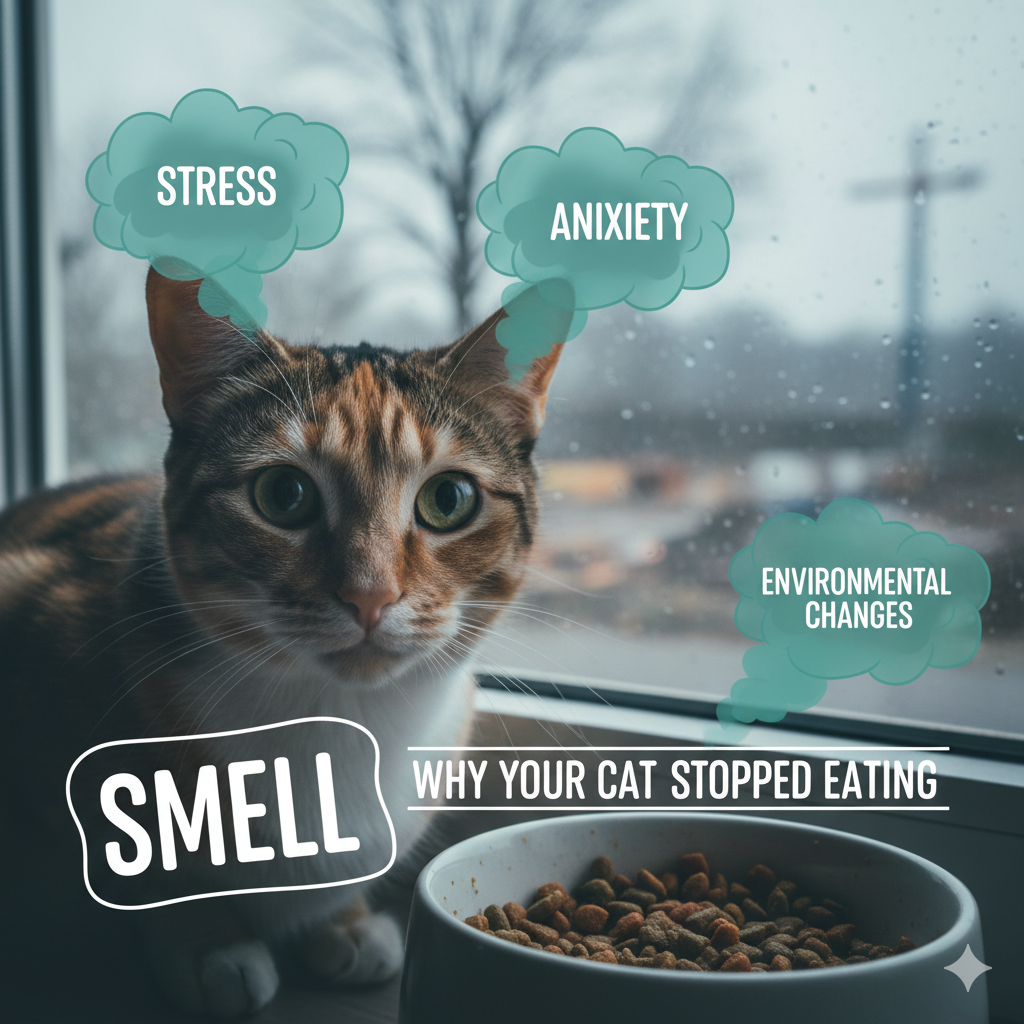
Stress, anxiety, and environmental changes are among the causes of a cat’s appetite loss that is most often overlooked. Yet, they can be responsible for cats refusing to eat for 24 hours or more. Cats, unlike dogs, who display anxiety through behaviors such as excessive barking and destructive chewing, show their anxiety-induced appetite loss through withdrawal, hiding, or complete refusal of food. If a cat is exposed to environmental stressors such as moving into a new house, adding a pet or member of the family, construction noises, disruptions in schedules, or furniture rearrangements, it may experience anxiety. As a result, they will instinctively retreat into survival mode and put eating on the back burner in order to feel safe. This biological response made sense for wild cats facing genuine threats, but in domestic settings, stress in cats can have dangerous health effects in the home. If the food refusal continues for more than 48 hours, it can lead to hepatic liposis. This is especially true in overweight cats.
Monitoring the intricate connection between feline stress and Every cat owner who is concerned about their pet’s health must understand how to feed them. The safety of cats depends on their ability to predict the environment and be familiar with smells, sounds, and spaces. When anxiety in cats disrupts the carefully maintained equilibrium, their body is flooded with adrenaline and cortisol, which suppresses appetite and triggers the fight or flight response. Whether you’re dealing with a cat not eating after moving, a cat hiding and refusing food following the arrival of a new baby, or mysterious appetite loss coinciding with seemingly minor household changes. Recognizing the behavioral causes of appetite losses allows you to use targeted stress reduction techniques, which restore your cat’s feeling of security and eating habits. This comprehensive guide explores the environmental factors that trigger food refusal in cats and identifies specific stressors. and provides veterinarian-approved anxiety management strategies to help your feline companion overcome stress-related anorexia and return to healthy eating habits before medical complications develop.This is most common question why my cat is not eating?
Understanding the Feline Stress Response: Why Anxiety Stops Eating

Stress, anxiety, and environmental changes The sympathetic nervous system is activated in cats to create a physiological cascade that directly suppresses digestion and appetite. This survival response is triggered by feline stress. Blood flow from the digestive organs redirects to the muscles. Cortisol levels rise, and brain priority is given to escape rather than eating, even when there’s no real threat in a domestic environment.
Biological Stress Mechanisms:
- Cortisol elevation—stress hormone release—suppresses hunger signals and digestive enzyme production
- Sympathetic nervous system activation—diverts blood from stomach/intestines to muscles for fight-or-flight response
- Nausea from anxiety—stress-induced stomach upset makes food unappealing or triggers vomiting
- Heightened vigilance state—cats prioritize threat monitoring over eating when feeling unsafe
- Digestive system shutdown—gastric motility slows dramatically during acute stress episodes
Common Environmental Stressors: What Triggers Cat Anxiety
Observing specific environmental stressors helps pinpoint why your cat stopped eating suddenly. Stress, anxiety, and environmental changes. The symptoms can be triggered by a variety of factors, from obvious disruptions such as moving homes to more subtle changes like using new cleaning products that have an unfamiliar smell and destabilizing your cat’s confidence in its territory.
Primary Stress Triggers in Cats:
- Moving to new home—complete territorial disruption causes 24-72 hour food refusal in most cats
- New pets or family members—introduction of unfamiliar animals or people threatens established hierarchy
- Construction noise or renovations—loud sounds, unfamiliar workers, structural changes overwhelm sensitive hearing
- Furniture rearrangement—territorial markers disrupted when favorite spots moved or removed completely
- Schedule changes—feeding time alterations, owner absence variations, routine disruptions—create insecurity
Recognizing Stress-Induced Appetite Loss: Key Behavioral Signs

Behavioral causes of appetite loss from cat anxiety present distinct shapes that differ from medical illness. Cats experiencing stress, anxiety, and environmental changes commonly show interest in food but can’t overcome their heightened stress response enough to eat comfortably—approaching the bowl repeatedly without consuming meals.
Stress-Related Eating Behavior Patterns:
- Cat hiding and refusing food—seeks secure, isolated locations away from perceived threats
- Approaching bowl but walking away—hunger present but anxiety overrides eating impulse
- Eating only when alone—requires complete privacy and perceived safety to consume food
- Preference for hand-feeding—accepts food from trusted person but won’t eat from bowl
- Midnight eating only—waits until the household is quiet and “threats” sleeping before eating
The Moving House Crisis: Why Relocation Stops Eating
A cat not eating after moving represents one of the most predictable stress-related anorexia scenarios, with 70-80% of cats refusing food for 24-72 hours following relocation. When cats lose their familiar scents, hiding places, and spatial memory, they experience a great deal of stress, which temporarily suppresses even their hunger.
Moving-Related Stress Factors:
- Total territorial loss—familiar scent markers, scratching posts, favorite spots completely absent
- Unfamiliar sounds and smells—a new home environment overwhelms sensitive feline senses
- Disrupted routine during move—feeding schedule chaos, travel stress, carrier confinement trauma
- Loss of established hierarchy—multi-cat households lose pecking order, requiring re-establishment
- Owner stress transmission—cats detect human anxiety during moving process, amplifying their stress
Multi-Cat Household Dynamics: Social Stress and Food Competition

Environmental factors in different cat home designs trigger dangerous social stress in cats around feeding times. Stress, anxiety, and environmental changes due to the introduction of new cats, a shift in dominance hierarchies, or competition for resources cause subordinate cats not to eat so as not to face aggressive encounters with food bowls.
Multi-Cat Stress Dynamics:
- Food bowl competition—dominant cats guard resources, preventing subordinate cats from eating
- Territorial disputes—conflicts over feeding areas—create anxiety around meal times
- New cat introduction stress—developing cats refuse food when a newcomer disrupts the hierarchy.
- Lack of separate feeding stations—inadequate resources force stressful competition for food access
- Feeding time confrontations—aggressive encounters during meals create lasting food aversion
Creating Safe Spaces: Environmental Modifications for Stress Reduction
Applying stress reduction techniques through targeted environmental enrichment addresses the stem reasons for anxiety-induced appetite loss. Stress, anxiety, and environmental changes require corresponding modifications to the environment that provide territorial security, hiding places, and predictable routines on which cats rely for emotional stability.
Effective Environmental Solutions:
- Dedicated feeding sanctuary—a quiet, low-traffic area away from litter boxes and household chaos
- Multiple hiding spots—cardboard boxes, cat trees, under-bed access—provide retreat options
- Vertical territory expansion—cat shelves and perches create escape routes from floor-level stressors
- Scent familiarity maintenance—keep familiar bedding, toys, scratching posts during transitions
- Separate resources in multi-cat homes—individual food stations, litter boxes, water bowls prevent competition
Pharmacological and Natural Anxiety Interventions
When environmental modifications alone don’t resolve stress-related anorexia, collecting anxiety management strategies with veterinarian-approved remedies or medications accelerates recovery. Pharmacological treatment may be beneficial for stress, anxiety, and environmental changes that cause food refusal after 48 hours. This will prevent hepatic liposis until behavioral interventions are effective.
Anxiety Reduction Options:
- Feliway diffusers—synthetic facial pheromones create calming territorial confidence (77% effectiveness rate)
- Prescription anti-anxiety medications—gabapentin or trazodone for severe stress cases requiring veterinary monitoring
- Natural calming supplements—L-theanine, tryptophan, valerian root formulations—lose mild anxiety
- Appetite stimulants—mirtazapine prescribed when stress prevents eating beyond 48 hours
- Behavioral modification training—gradual desensitization to specific stress triggers over weeks
Timeline and Recovery: When Stress-Related Anorexia Becomes Medical Emergency
Monitoring the important timeline for stress, anxiety, and environmental changes reasons appetite loss and determines When home management is appropriate and when veterinary intervention is necessary. Although temporary food refusal is normal behavior for cats during stressful times, prolonged anorexia can have life-threatening consequences and requires professional treatment.
Stress Anorexia Timeline:
- 0-24 hours no eating – normal stress response, monitor closely, offer favorite foods
- 24-48 hours food refusal—concerning, especially in overweight cats; implement intensive stress reduction
- 48-72 hours without food—veterinary consultation required; hepatic lipidosis risk increases dramatically
- 72+ hours complete anorexia—a medical emergency requiring blood work, appetite stimulants, possible hospitalization
- Recovery typically 3-7 days—once the stressor is addressed, appetite returns gradually over several days
FAQs
Can stress cause a cat to stop eating?
Yes. Stress triggers cortisol release and sympathetic nervous system activation that suppresses hunger signals and redirects blood from digestive organs to muscles.
- Environmental stressors activate fight-or-flight response, blocking feline appetite
- Cat anxiety causes digestive system shutdown and stress-induced nausea
- Behavioral causes of appetite loss differ from medical illness symptoms
- Cortisol elevation suppresses digestive enzyme production and gastric motility
- Feline stress response prioritizes threat monitoring over food consumption
How long can a cat go without eating due to stress?
24-72 hours typically, but a medical emergency occurs after 72 hours with hepatic lipidosis risk.
- Normal stress response: 0-24 hours food refusal requires close monitoring
- Concerning period: 24-48 hours, especially in overweight cats
- Veterinary consultation required: 48-72 hours without eating
- Critical emergency: 72+ hours triggers fatty liver disease
- Recovery timeline: 3-7 days once environmental stressor removed
Why is my cat not eating after moving?
Complete territorial disruption overwhelms cats, with 70-80% refusing food for 24-72 hours post-relocation.
- Loss of familiar scent markers and territorial security
- Unfamiliar environmental sounds and smells cause sensory overload
- Disrupted feeding schedule and routine stability during move
- Cats require environmental predictability for safe eating behavior
- Spatial memory loss and hiding spot absence trigger survival mode
How do I get my stressed cat to eat?
Create a dedicated feeding sanctuary and implement stress reduction techniques with environmental modifications.
- Establish quiet, low-traffic feeding area away from perceived threats
- Provide multiple hiding spots using boxes, cat trees, vertical perches
- Use Feliway pheromone diffusers (77% effectiveness for cat anxiety)
- Offer hand-feeding from trusted person for comfort and security
- Maintain consistent feeding schedule with familiar food bowls and routines
What are signs of stress-related appetite loss in cats?
Yes, distinct behavioral patterns differ from medical illnesses, including hiding, bowel avoidance, and midnight eating.
- Cat hiding and refusing food in isolated secure locations
- Approaching food bowl repeatedly but walking away without eating
- Eating only when alone requiring complete privacy and perceived safety
- Accepting hand-feeding but rejecting bowl feeding from anxiety
- Multi-cat households show food competition and territorial disputes
When should I take my cat to the vet for not eating?
After 48-72 hours of food refusal, veterinary consultation is required to prevent hepatic lipidosis.
- 0-24 hours: Normal stress response, monitor closely, offer favorite foods
- 24-48 hours: Concerning period, implement intensive stress reduction
- 48-72 hours: Veterinary consultation required; fatty liver risk increases
- 72+ hours: Medical emergency requiring blood work and appetite stimulants
- Overweight cats face higher hepatic lipidosis risk with extended food refusal
What helps reduce cat anxiety and stress?
Environmental modifications and anxiety management strategies restore territorial security and predictable routines.
- Dedicated feeding sanctuary in quiet, low-traffic area
- Multiple hiding spots with cardboard boxes, cat trees, under-bed access
- Vertical territory expansion using cat shelves and escape perches
- Scent familiarity maintenance with familiar bedding, toys, scratching posts
- Separate resources in multi-cat homes prevent food bowl competition
Can moving cause a cat to stop eating?
Yes, 70-80% of cats refuse food for 24-72 hours following relocation due to territorial disruption.
- Total territorial loss removes familiar scent markers and favorite spots
- Unfamiliar sounds and smells overwhelm sensitive feline senses
- Disrupted routine creates feeding schedule chaos and travel stress
- Multi-cat households lose established hierarchy requiring re-establishment
- Owner stress transmission amplifies cat anxiety during moving process
What are natural remedies for cat anxiety?
Natural calming supplements and pheromone diffusers reduce mild to moderate feline stress.
- Feliway diffusers with synthetic facial pheromones (77% effectiveness rate)
- L-theanine supplements for natural anxiety reduction
- Tryptophan formulations promote calming neurotransmitter production
- Valerian root provides mild sedative effect for stressed cats
- Behavioral modification training through gradual desensitization to stress triggers
How do I create a safe feeding space for my cat?
Establish a dedicated feeding sanctuary away from litter boxes and household chaos with environmental enrichment.
- Quiet, low-traffic location free from loud noises and foot traffic
- Separate feeding stations in multi-cat homes prevent resource competition
- Elevated feeding areas provide sense of security and territorial control
- A consistent feeding schedule maintains routine predictability cats require
- Familiar bowls and placement preserve scent markers and comfort associations
Conclusion
Stress, anxiety, and environmental changes represent a massive yet often invisible threat to feline health. Many pet owners are unaware that this condition is causing millions of cats to lose their appetites every year. They assume it’s only medical conditions that cause food refusal. By monitoring how feline stress manifests through behavioral causes of appetite loss, identifying common environmental stressors from household changes, and applying proven stress reduction techniques, involved environmental modifications, and anxiety management strategies, you can stop the dangerous progression of a temporary stress response into a life-threatening hepatic liposis. Whether you’re managing a cat not eating after moving, early recognition and prompt action are key to addressing the dynamics of multi-cat households or noticing subtle signs that cat anxiety is affecting eating habits.
Remember that cats experiencing stress-related anorexia for more than 48 hours require veterinary assessment regardless of whether they seem otherwise healthy—the risk of fatty liver disease escalates rapidly in cats who stop eating, especially those who are overweight. Create safe feeding sanctuaries, maintain consistent routines, introduce environmental changes gradually, and never hesitate to seek professional guidance when stress, anxiety, and environmental changes disrupt your cat’s eating for extended periods. Your cat’s instinct to hide weakness means they’re depending on your observational skills and knowledge of stress triggers in cats to protect them from the serious health consequences of prolonged appetite loss.
For comprehensive information on all causes of appetite loss, including medical conditions, read our complete pillar guide: Why Is My Cat Not Eating? 7 Common Causes & Solutions